Veneers, Bonding or Crowns: Which Is Better for Front Teeth?
You want to improve one or more front teeth.
Maybe a tooth is chipped.
Maybe the shape has always bothered you.
Perhaps your teeth are worn, discoloured or uneven.
Then you start researching and suddenly you have three different options in front of you:
Composite bonding. Veneers. Crowns.
So which one is better?
The answer depends on what is actually wrong with the tooth.
Bonding adds tooth-coloured material to selected areas of a tooth. Veneers cover mainly the visible front surface. Crowns cover substantially more of the tooth and are usually considered when greater restoration or protection is required.
None of these treatments is automatically better than the others.
The right question is:
“How much of my natural tooth needs to be changed or restored?”
Let’s look at the differences.
What Is Composite Bonding?
Composite bonding uses tooth-coloured resin material to reshape or repair selected parts of a tooth.
The material is applied directly to the natural tooth, shaped by the dentist and hardened before being polished.
Bonding may be considered for concerns such as:
- Small chips
- Minor shape irregularities
- Small gaps
- Worn tooth edges
- Uneven contours
- Selected cosmetic corrections
One of its main advantages is that it can often be a relatively conservative way of changing a tooth’s appearance.
SmileBay has previously documented the use of composite resin to restore a chipped upper front tooth while preserving the remaining natural tooth structure. (smilebaydental.com)
What Is a Dental Veneer?
A veneer is a thin restoration placed over the front surface of a tooth to change its visible shape, colour, size or surface appearance.
Veneers may be considered when a patient wants to improve concerns such as:
- Discolouration
- Chipped teeth
- Worn edges
- Irregular tooth shape
- Small gaps
- Certain mild alignment-related appearance concerns
SmileBay describes veneers as thin, tooth-coloured shells used to address concerns including chipped, broken, discoloured or smaller-than-average teeth. (smilebaydental.com)
A veneer does not normally cover the entire tooth in the same way as a crown.
That difference becomes important when deciding how much restoration a tooth actually needs.
What Is a Dental Crown?
A dental crown covers substantially more of an existing tooth and is used when the tooth needs greater restoration of its shape, strength, bite or appearance.
A crown may be considered when a tooth is:
- Heavily damaged
- Significantly worn
- Fractured
- Heavily restored
- Structurally weakened
- In need of more extensive coverage
SmileBay describes crowns as restorations that cover a tooth to restore its shape, size, strength, bite and appearance. (smilebaydental.com)
This means crowns generally play a different role from a small cosmetic bonding repair.
What Is the Main Difference Between Bonding, Veneers and Crowns?
The easiest way to compare them is by asking how much of the tooth is being changed or covered.
| Composite Bonding | Veneer | Crown |
|---|---|---|
| Adds material to selected areas | Covers mainly the visible front surface | Covers substantially more of the tooth |
| Often used for smaller repairs or shape changes | Often used for broader cosmetic changes | Often used when the tooth needs greater structural restoration |
| Directly shaped by the dentist | Custom restoration | Custom restoration |
| Can be relatively conservative in suitable cases | May require some tooth preparation depending on the case | Usually requires more extensive preparation |
| Primarily changes selected areas of shape/appearance | Changes colour, shape and visible surface | Restores shape, function, strength and appearance |
This doesn’t mean treatment always follows a simple ladder from:
Bonding → Veneer → Crown
Each treatment solves a different problem.
The dentist needs to assess the tooth first.
If I Have a Small Chip, Do I Need a Veneer?
Not necessarily.
A small chip may sometimes be repaired with composite bonding if the remaining tooth is otherwise healthy and the dentist believes a direct restoration is appropriate.
Bonding can allow the missing area to be rebuilt without covering the entire front surface of the tooth.
This may be particularly useful when:
- The chip is relatively small
- Most of the natural tooth is healthy
- The tooth colour is acceptable
- The bite allows a bonded repair
- The patient wants a conservative correction
SmileBay’s existing restorative dentistry article shows this kind of approach in a young patient with a chipped front tooth, where composite resin was used rather than a full-coverage crown. (smilebaydental.com)
However, larger fractures or more extensively damaged teeth may need a different approach.
When Might a Veneer Be Better Than Bonding?
A veneer may be considered when the desired change involves more of the visible surface of the tooth.
For example, the patient may want to change:
- Overall tooth shape
- Tooth length
- Colour
- Surface appearance
- Several cosmetic concerns at the same time
Bonding can also change shape and appearance, but the materials and technique are different.
The decision may depend on:
- How large the area is
- How much colour change is required
- Existing enamel
- Bite
- Tooth position
- How many teeth are being treated
- Desired appearance
- Maintenance expectations
The dentist should explain why one approach may be more appropriate rather than simply presenting veneers as an automatic upgrade from bonding.
When Might a Crown Be Better Than a Veneer?
A crown may be considered when the tooth needs more extensive structural restoration than a veneer can provide.
For example, the tooth may have:
- Significant loss of structure
- A large existing filling
- A major fracture
- Extensive wear
- A combination of structural and cosmetic concerns
A veneer mainly changes the visible front surface.
If the whole tooth requires more comprehensive restoration, a crown may be more appropriate.
This is why deciding between a crown and veneer is not purely an aesthetic choice.
The condition of the underlying tooth matters.
Do Crowns Remove More Tooth Than Veneers?
Generally, a crown involves preparing more of the tooth because it covers substantially more surfaces.
A veneer typically focuses mainly on the visible front portion of the tooth.
But the actual amount of tooth preparation varies.
It depends on:
- Existing tooth position
- Tooth shape
- How much colour needs to change
- The restorative material
- Available enamel
- Bite
- The planned final shape
Some veneer cases may require relatively little preparation.
Other cases may require more.
The dentist should plan the restoration according to the tooth rather than choosing a treatment purely because it sounds more conservative.
Do Veneers Always Require Teeth to Be Shaved Down?
Not every veneer case requires the same amount of preparation.
The amount of tooth structure that may need modification depends on the starting position, shape, colour and final design of the restoration.
For example, a tooth that already sits too far forward presents a very different situation from one that is slightly small or set further back.
This is also why Invisalign may sometimes be considered before veneers.
Moving a tooth into a more favourable position first may change how the final restoration can be designed.
We cover this separately in:
Do I Need Invisalign Before Veneers?
Can Bonding Look as Natural as Veneers?
Bonding can produce very natural-looking results in appropriate cases.
The final appearance depends on factors such as:
- Dentist’s technique
- Tooth shape
- Colour matching
- Surface texture
- Polishing
- Position of the restoration
- Existing tooth condition
Composite resin is shaped directly by the dentist.
This gives the dentist control over the contour and appearance of the repair.
SmileBay’s current restorative dentistry content describes the use of composite resin to recreate the shape and colour of a chipped front tooth so it blends with neighbouring teeth. (smilebaydental.com)
However, bonding and ceramic veneers are different restorative materials and may have different maintenance needs over time.
The best choice depends on the individual case.
Do Veneers Look More Natural Than Crowns?
Neither treatment is automatically more natural-looking.
The final appearance depends on:
- Tooth proportions
- Shape
- Colour
- Translucency
- Surface texture
- Gum line
- Restoration design
- How well the restoration blends with neighbouring teeth
A well-designed crown can look very natural.
So can a veneer.
The more important question is whether the restoration being used is appropriate for the condition of the tooth.
Choosing a veneer for a tooth that actually needs more extensive restoration does not automatically create a better outcome.
Likewise, placing a full crown on a tooth that only needs a small cosmetic repair may be more treatment than necessary.
What If My Front Tooth Is Discoloured?
The treatment depends partly on why the tooth is discoloured.
Possible approaches may include:
- Teeth whitening
- Composite bonding
- Veneer
- Crown
- Treatment of an underlying dental problem where necessary
Whitening changes the colour of natural tooth structure.
Bonding, veneers and crowns cover or replace visible surfaces using restorative materials.
If the discolouration is significant, your dentist also needs to determine whether it is purely cosmetic or related to a previous dental injury, restoration or another dental condition.
This is why treatment should begin with diagnosis rather than shade selection.
What If My Front Teeth Are Worn Down?
Worn front teeth may need more than a simple cosmetic fix.
The dentist needs to determine:
- How much structure has been lost
- Why the wear occurred
- Whether the bite has changed
- Whether grinding or clenching may be involved
- How several teeth relate to one another
Possible treatments may include:
- Composite bonding
- Veneers
- Crowns
- Orthodontics
- Bite-related treatment
- A wider smile makeover or rehabilitation plan
The appropriate choice depends on the severity and cause of the wear.
Simply making worn teeth longer without understanding why they became short may not address the whole problem.
What If Only One Front Tooth Looks Different?
A single front tooth can sometimes be more challenging aesthetically than treating several teeth because it needs to blend with its natural neighbour.
The dentist may consider:
- Colour
- Tooth length
- Width
- Surface texture
- Translucency
- Gum level
- Position
- Shape of the neighbouring tooth
Depending on what is wrong with the tooth, treatment could involve:
- Bonding
- Veneer
- Crown
- Whitening before restoration
- Another suitable approach
The aim is usually to make the restored tooth belong naturally within the smile rather than stand out as “the dental tooth.”
What If Several Front Teeth Need Changing?
When several visible teeth need treatment, the dentist may step back and plan the smile as a whole rather than treating each tooth independently.
This is where a Smile Makeover approach becomes relevant.
SmileBay’s SMILEfix service combines different aesthetic and restorative treatments according to the patient’s individual needs, including veneers, crowns, orthodontics and Invisalign. (smilebaydental.com)
The treatment plan may need to consider:
- Tooth position
- Shape
- Colour
- Gum levels
- Bite
- Existing restorations
- Number of teeth visible when smiling
- Overall facial harmony
This doesn’t mean every tooth needs to be treated.
It means the dentist should understand the complete smile before deciding which individual teeth actually need changes.
How Can Digital Smile Design Help?
Digital Smile Design can help the dentist and patient visualise proposed changes in tooth shape and proportions before the final restorative treatment is completed.
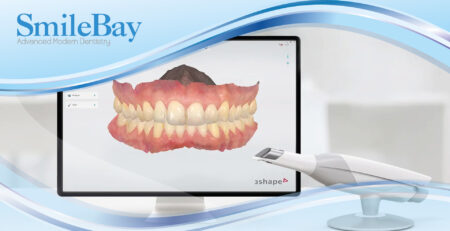
SmileBay’s digital workflow includes 3Shape intraoral scanning and smile-design software that can generate 3D models and visual simulations. (smilebaydental.com)
This can help when comparing options such as:
- Minor bonding
- Veneers
- Crowns
- Orthodontic movement before restoration
- Treatment of several teeth as part of a smile makeover
A digital simulation can make it easier to discuss:
“How much do we actually need to change?”
rather than starting treatment without a clear visual plan.
What Role Does the Dental Laboratory Play?
When ceramic veneers or crowns are being produced, the dental technician plays an important role in translating the treatment plan into the final restoration.
The dentist and technician may communicate about:
- Shape
- Colour
- Proportion
- Surface texture
- Translucency
- Bite
- Fit
- How the restoration blends with natural teeth
SmileBay has an in-house digital dental laboratory using CAD/CAM workflows to produce restorations including crowns, veneers and other dental prostheses. (smilebaydental.com)
For front teeth, this collaboration is especially important because small differences in contour or colour can be noticeable in the smile.
Frequently Asked Questions About Bonding, Veneers and Crowns
1. Which is better: bonding, veneers or crowns?
There is no universal “best” option.
Bonding is often used for smaller direct repairs or shape changes, veneers cover mainly the visible front surface, and crowns provide more extensive coverage when a tooth needs greater restoration.
The appropriate choice depends on the condition of the tooth and what needs to change.
2. Is bonding more conservative than veneers?
In many suitable cases, composite bonding can involve adding material directly to the tooth with limited alteration of the natural structure.
However, this does not mean bonding is automatically the correct treatment for every cosmetic concern.
The size of the defect, bite and long-term restorative needs still need to be considered.
3. Can a veneer fix a chipped front tooth?
Sometimes.
A small chip may also be suitable for bonding.
A more extensive defect may require another type of restoration.
Your dentist needs to assess how much tooth structure remains before deciding.
4. Is a crown stronger than a veneer?
A crown covers more of the tooth and is often used when more extensive restoration is required.
But “stronger” alone should not determine the treatment.
If a tooth does not need full-coverage restoration, a more conservative approach may be considered.
5. Can I replace old bonding with veneers later?
Possibly.
Existing bonding can be reassessed if it becomes worn, discoloured, chipped or if your treatment goals change.
Whether veneers are appropriate later depends on the condition of the tooth at that time.
6. Can I combine bonding and veneers in the same smile makeover?
Yes, in selected cases different teeth may require different restorative approaches.
For example, one tooth may only need a small bonded correction while another may require a veneer.
A smile makeover does not mean every visible tooth must receive the same treatment.
The Takeaway
So, which is better for front teeth: bonding, veneers or crowns?
It depends on how much of the tooth actually needs changing.
A useful way to remember the difference is:
Bonding adds to selected areas.
Veneers cover mainly the visible front surface.
Crowns provide more extensive coverage when the tooth requires greater restoration.
If the concern is small, a conservative repair may be enough.
If the entire visible appearance of the tooth needs changing, a veneer may be considered.
If the tooth is heavily damaged or structurally compromised, a crown may be more appropriate.
The goal of a smile makeover should not be to choose the most extensive treatment.
It should be:
Use the treatment that solves the problem while preserving healthy natural tooth structure whenever clinically appropriate.
Not Sure Whether You Need Bonding, Veneers or Crowns?
If you have a chipped, worn, discoloured or uneven front tooth, begin with an assessment of the tooth itself.
SmileBay Dental provides composite restorative treatment, dental veneers and dental crowns in Penang as part of its cosmetic and restorative dentistry services. (smilebaydental.com)
SmileBay also uses digital intraoral scanning, Digital Smile Design and CAD/CAM restorative workflows, with an in-house dental laboratory supporting veneer and crown fabrication within the group. (smilebaydental.com)
Your dentist can assess:
- How much healthy tooth remains
- Tooth position
- Shape
- Colour
- Bite
- Existing restorations
- Your overall smile goals
and explain whether bonding, a veneer, a crown or another approach may be appropriate.
Speak to the SmileBay Dental team for an individual smile assessment.
The appropriate treatment for a front tooth depends on the condition of the individual tooth and can only be determined after clinical assessment.
Message us on WhatsApp to book your consultation today
Let’s restore your bite, comfort, and confidence — safely and beautifully.