Can Invisalign Close Gaps Between Teeth?
You’ve always had a small gap between your front teeth.
Or perhaps you’ve recently noticed spaces appearing that weren’t there before.
If you’re considering clear aligners, one of the first questions you may have is:
“Can Invisalign actually close the gap?”
The short answer is:
Invisalign can be used to close certain gaps between teeth by gradually moving the teeth into planned positions. However, the cause, size and location of the gap matter. Some spaces may need orthodontic treatment alone, while others may be better managed with a combination of orthodontic and restorative dental treatment.
That’s why the first step isn’t simply deciding how to close the space.
It’s finding out:
Why is the gap there in the first place?
What Is a Gap Between Teeth?
A space between two teeth is sometimes called a diastema.
The most noticeable example is usually a gap between the two upper front teeth, but spacing can occur anywhere in the mouth.
You might have:
- One gap between two teeth
- Several small spaces
- Gaps throughout the upper or lower teeth
- A space caused by a missing tooth
- Spaces created because some teeth are naturally small
Some gaps have been present for many years.
Others may develop or become more noticeable over time.
The appearance may look similar, but the underlying reason can be very different.
Why Do Gaps Develop Between Teeth?
Spaces between teeth can develop for several reasons, which is why the cause should be assessed before choosing treatment.
Possible reasons include:
1. The teeth are relatively small for the jaw
If the teeth are smaller in proportion to the available space in the dental arch, gaps may remain between them.
2. A tooth is naturally smaller than expected
Sometimes one or more teeth are narrower or smaller in shape.
This can leave additional space beside them even when the other teeth are relatively well aligned.
3. A tooth is missing
If a permanent tooth is absent, the surrounding teeth may leave or move into an open space.
This is very different from simply having a small gap between two otherwise normal teeth.
4. The teeth have moved
Teeth can change position over time.
A new or increasing gap deserves assessment because the dentist needs to understand why the teeth are moving.
5. The bite or tooth positions contribute to spacing
The relationship between the upper and lower teeth can influence how spaces are distributed.
6. Soft tissue between the front teeth may play a role
The tissue connecting the upper lip and gum is called the labial frenum.
In some patients, its position or form may need to be considered when assessing a persistent front-tooth gap.
7. Oral habits may affect tooth position
Certain long-standing habits involving the tongue or lips can sometimes influence how teeth are positioned.
The important point is that “gap teeth” is a description not a diagnosis.
Your dentist first needs to understand what is creating the space.
Can Invisalign Close a Front-Tooth Gap?
In many suitable cases, Invisalign clear aligners can gradually move spaced front teeth closer together as part of an orthodontic treatment plan.
The aligners are custom-made in a sequence.
Instead of trying to move a tooth from its starting position to its final position all at once, treatment involves a series of planned movements.
The dentist needs to consider more than just the visible gap.
The treatment plan should also consider:
- The position of the neighbouring teeth
- The shape and size of the teeth
- Your bite
- Other spaces in the mouth
- Gum health
- Whether there are missing teeth
- Where the teeth need to finish
So although the gap may be what you notice in the mirror, your dentist needs to plan the whole smile and bite, not simply push two front teeth together.
Does the Size of the Gap Matter?
Yes.
A small space and a very large space can require very different treatment plans.
The dentist also needs to consider whether there is:
- One isolated gap
- Generalised spacing throughout the mouth
- An unusually small tooth creating the space
- A missing tooth
- A bite problem associated with the spacing
This is why treatment time cannot be predicted simply by measuring the visible space between two teeth.
Two patients with gaps that look similar from the front can have very different orthodontic needs.
What If My Gap Is Caused by Small Teeth?
This is where orthodontics and cosmetic/restorative dentistry sometimes overlap.
Imagine that two front teeth are simply smaller than the surrounding teeth.
Closing every millimetre of space orthodontically may not always create the most balanced final tooth proportions.
Depending on the case, the dentist may instead consider a treatment plan that:
- Uses Invisalign to reposition the teeth appropriately
- Creates or redistributes space in planned locations
- Uses bonding, veneers or another restorative treatment to improve tooth shape where appropriate
In other words:
Sometimes the goal of Invisalign isn’t to close every gap completely.
It may be to put the teeth in the right positions so that the final smile can be completed more naturally.
This is why orthodontic planning and smile design can sometimes work together.
What If the Gap Is Caused by a Missing Tooth?
A gap created by a missing tooth is very different from ordinary spacing.
Invisalign does not replace a missing tooth.
However, orthodontic treatment may sometimes be used to manage the space around a missing tooth.
Depending on the overall treatment plan, the dentist may want to:
- Close the space
- Maintain the space
- Create the correct amount of space for a replacement tooth
- Move neighbouring teeth into better positions
- Improve symmetry before restorative treatment
A replacement tooth may then involve another treatment such as:
- A dental bridge
- An implant-supported crown
- Another suitable restoration
This is why Invisalign can sometimes form one part of a larger restorative treatment plan rather than being the entire treatment.
SmileBay has previously documented a patient case where Invisalign was used to create and redistribute space before restorative work involving a Maryland bridge and crown.
That kind of treatment needs individual planning.
Can Invisalign Close a Gap Without Attachments?
Sometimes but not always.
You may already have heard about Invisalign attachments.
These are small tooth-coloured shapes bonded temporarily to selected teeth to help the aligner engage the tooth for particular movements.
Whether you need attachments depends on:
- Which teeth need to move
- How they need to move
- The size and location of the space
- The overall orthodontic plan
Some spacing cases may involve attachments.
Others may not.
The need for attachments should be determined from your individual treatment plan rather than by comparing your aligners with someone else’s.
Will Closing One Gap Create Another Gap Somewhere Else?
This is exactly why Invisalign treatment needs to be planned across the entire dental arch.
Moving teeth affects the distribution of space.
If two front teeth are simply pushed together without considering the surrounding teeth, the space may effectively move somewhere else.
A proper orthodontic plan therefore considers:
- Where the existing spaces are
- Which teeth need movement
- Where each tooth should finish
- How tooth proportions relate to one another
- How the upper and lower teeth fit together
The goal is not simply:
“Make this gap disappear.”
It is:
“Manage the available space in a way that produces an appropriate overall alignment and bite.”
What If I Only Want to Fix One Gap?
It’s understandable.
Perhaps everything else about your smile feels fine and the only thing that bothers you is the small space between your two front teeth.
However, your dentist still needs to assess your entire bite.
A visible gap may be the part you want changed, but moving those teeth can affect:
- Neighbouring teeth
- Tooth contacts
- The way your upper and lower teeth meet
- Space elsewhere in the arch
This does not necessarily mean your treatment will be complicated.
It means the dentist should understand the complete situation before deciding how limited or extensive treatment needs to be.
Could Dental Bonding Close the Gap Instead?
For selected small gaps, dental bonding may be another option instead of orthodontically moving the teeth.
Bonding involves adding tooth-coloured restorative material to modify the shape or width of a tooth.
This can sometimes work well when:
- The space is relatively small
- The teeth are already appropriately positioned
- Tooth shape contributes to the gap
- The bite is suitable
But bonding and Invisalign solve the problem differently.
Invisalign
Moves the teeth.
Dental bonding
Changes the shape of the teeth.
That distinction matters.
If the teeth themselves are in the wrong positions, simply making them wider may not address the underlying alignment.
If the teeth are well positioned but naturally narrow, moving them may not be the only option.
Your dentist needs to determine whether the problem is tooth position, tooth shape or both.
What About Veneers for Gaps?
Veneers can also change the visible shape and proportions of selected teeth.
For certain cosmetic situations, they may be considered as one possible approach.
But veneers and Invisalign are again doing different jobs.
Invisalign moves teeth.
Veneers change the visible shape and surface of teeth.
There may also be situations where orthodontics is used first to improve tooth position before restorative treatment is considered.
The most conservative and appropriate approach depends on the condition of the teeth and what is actually causing the spaces.
Could My Gap Come Back After Invisalign?
Teeth can change position after orthodontic treatment.
This is why retention is an important part of treatment after Invisalign.
Once the active tooth movement has been completed, your dentist will normally discuss a retainer plan to help maintain the new tooth positions.
This is particularly relevant for a front-tooth gap because even a relatively small reopening may be visually noticeable.
Your dentist may also consider whether there are other factors that could influence the stability of the space.
Completing Invisalign therefore isn’t the end of the orthodontic journey.
Maintaining the result matters too.
What If My Gap Has Suddenly Started Getting Bigger?
A new or increasing space between adult teeth should be assessed before assuming it is only a cosmetic orthodontic problem.
There can be several reasons why teeth change position.
Your dentist may need to check:
- Gum health
- Tooth support
- Your bite
- Missing teeth
- Habits affecting the teeth
- Existing dental restorations
- Other changes in the mouth
If you’ve had the same small front gap for many years, that is one situation.
If your teeth previously touched and are now gradually separating, that is another.
Do not immediately begin cosmetic treatment without first understanding why the change occurred.
How Does the Dentist Plan Invisalign for Gap Teeth?
The process begins with an orthodontic assessment rather than simply looking at one photograph of the gap.
Your dentist may assess:
- Tooth positions
- Tooth shape and size
- Spacing throughout the mouth
- Your bite
- Gum health
- Existing dental restorations
- Missing teeth
- Your treatment goals
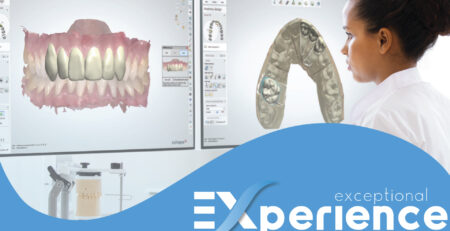
Digital scans can then create a 3D model of the teeth for treatment planning.
SmileBay uses digital intraoral scanning technology as part of its orthodontic and restorative digital workflows.
The treatment plan can then determine:
- Which teeth need to move
- Where the spaces should close
- Whether some space should be maintained
- Whether attachments may be required
- Whether restorative treatment may be useful afterward
This is why treating gaps is often about space management, not simply “closing spaces.”
Frequently Asked Questions About Invisalign and Gap Teeth
1. Can Invisalign close a gap between my two front teeth?
Invisalign may be able to close a front-tooth gap in suitable cases.
The dentist first needs to determine what caused the gap and whether orthodontically moving the teeth is the appropriate treatment.
2. Can Invisalign close large gaps?
Possibly, but the size of the gap is only one factor.
Your dentist also needs to assess:
- Why the gap exists
- How much spacing is present elsewhere
- Tooth size
- Tooth position
- Your bite
- Whether any teeth are missing
Larger or more complex spaces may require a different or combined treatment approach.
3. How long does Invisalign take to close a gap?
There is no single treatment time for all tooth gaps.
The treatment duration depends on the amount of movement required, other alignment or bite issues and how your individual treatment progresses.
Your dentist can provide an estimated timeline after completing the orthodontic assessment and digital treatment plan.
4. Can Invisalign close a gap caused by a missing tooth?
Invisalign can move the surrounding teeth, but it cannot replace the missing tooth itself.
Depending on your treatment plan, orthodontics may be used to close the space or create an appropriate space for a future bridge, implant-supported crown or another restoration.
5. Is Invisalign better than bonding for a tooth gap?
Neither treatment is automatically better.
They solve different problems.
Invisalign moves teeth.
Bonding changes tooth shape.
Your dentist needs to determine whether your gap is mainly caused by tooth position, tooth size or a combination of both.
6. Will I need a retainer after closing a gap with Invisalign?
Yes, retention is generally an important part of maintaining tooth positions after orthodontic treatment.
Your dentist will recommend the appropriate retainer and wear schedule based on your individual result.
The Takeaway
If you have gaps between your teeth, Invisalign may be one way of managing them but closing the visible space is only part of the decision.
Your dentist first needs to understand:
- Why the gap exists
- Whether the teeth themselves are too small
- Whether a tooth is missing
- How your bite fits together
- Whether other spaces are present
- Whether tooth movement or tooth reshaping is more appropriate
In some cases:
Invisalign alone may be suitable.
In others:
Bonding, veneers or another restorative treatment may be considered.
And sometimes:
Invisalign may be used first to position the teeth correctly before another restoration completes the smile.
The goal isn’t simply to close a gap.
It’s to understand why the space exists and choose the treatment that fits the whole smile.
Have a Gap Between Your Teeth and Considering Invisalign in Penang?
If you have spacing between your teeth and are wondering whether Invisalign can help, an orthodontic assessment can determine whether clear aligners are appropriate.
SmileBay Dental provides Invisalign and clear-aligner treatment in Penang, supported by digital intraoral scanning for treatment planning. SmileBay’s current dental team also includes certified Invisalign providers.
Your dentist can assess whether your gap is mainly related to tooth position, tooth shape, a missing tooth or another factor and explain which treatment options may be appropriate.
Speak to the SmileBay Dental team to arrange an Invisalign assessment.
Individual suitability for Invisalign and the treatment required for tooth spacing can only be determined after dental and orthodontic assessment.
Message us on WhatsApp to book your consultation today
Let’s restore your bite, comfort, and confidence — safely and beautifully.