What Is X-Guide Dental Implant Surgery?
If you’re considering dental implants, you might hear your dentist mention 3D scans, digital implant planning, guided surgery or X-Guide.
But what does X-Guide actually do?
X-Guide is a 3D navigation system that assists dentists during dental implant surgery. After the implant position has been planned digitally, X-Guide provides real-time guidance during treatment so the dentist can follow the planned position, angle and depth of the implant.
A simple way to understand it is to think about navigation when driving.
You plan where you want to go before starting the journey. While travelling, the navigation system shows where you are in relation to the planned route.
X-Guide applies a similar concept to implant surgery.
The implant is planned first. During surgery, the technology helps the dentist navigate according to that plan.
Why Is Planning Important for a Dental Implant?
A dental implant is not simply placed wherever there happens to be available bone.
The position of a dental implant needs to take into account the jawbone, nearby anatomical structures and the position of the final replacement tooth.
Before implant surgery, the dental team may need to assess:
- How much bone is available
- The width and height of the bone
- Nearby teeth
- Nerves within the jaw
- The maxillary sinus
- The planned implant angle
- The planned implant depth
- Where the final crown or replacement teeth should sit
This is why dental implant treatment usually begins with diagnosis and planning rather than surgery itself.
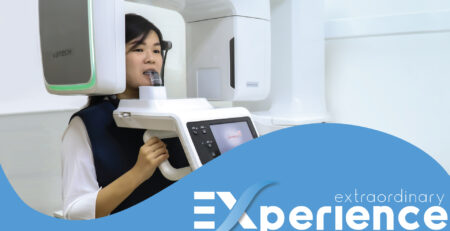
At SmileBay, digital implant planning may involve CBCT 3D imaging to help the dental team evaluate the patient’s anatomy before deciding how an implant should be positioned.
How Does X-Guide Dental Implant Surgery Work?
X-Guide combines the implant plan created before surgery with real-time navigation during the procedure.
Here’s what the patient journey may look like.
Step 1: Your Teeth and Jawbone Are Assessed
The first step is determining whether a dental implant is suitable for you.
Your dentist examines your teeth, gums, bite and missing-tooth area. Your medical and dental history will also be reviewed.
A 3D dental scan may then be taken to assess:
- Available jawbone
- Bone shape
- Nearby teeth
- Nerve position
- Sinus position
- Other important anatomical structures
This information provides the foundation for the implant treatment plan.
Step 2: The Implant Is Planned Digitally
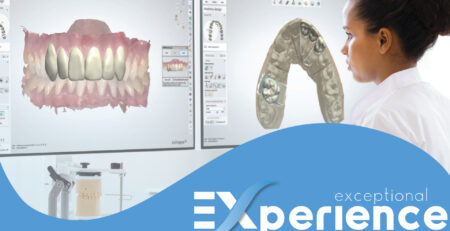
The dentist can use the 3D information to plan the proposed implant position before surgery begins.
The goal is not simply to find somewhere to place the implant.
The planned position should also consider where the final replacement tooth needs to be.
This is sometimes described as restoratively driven implant planning—the implant is planned with the future crown, bridge or prosthesis in mind.
Step 3: X-Guide Connects the Digital Plan to the Patient
Before navigation begins, the X-Guide system establishes the relationship between the patient’s mouth and the digital implant plan.
This allows the system to recognise where the dentist’s surgical instruments are in relation to the patient’s 3D anatomy.
Step 4: The Dentist Uses Real-Time Navigation During Surgery
During implant surgery, the dentist can view the position of the surgical instrument on the X-Guide navigation display.
The system provides real-time information relating to:
- Implant position
- Implant angle
- Implant direction
- Implant depth
The dentist performs the procedure while referring to this navigation information.
Importantly, X-Guide assists the dentist it does not perform the surgery independently.
How Is X-Guide Different From a Traditional Surgical Guide?
Both methods can begin with digital implant planning, but they guide the dentist in different ways.
A traditional computer-guided approach may use a 3D-printed surgical guide made before the appointment.
The guide fits into the patient’s mouth and contains openings designed to help direct the instruments according to the planned implant position.
X-Guide uses dynamic navigation instead of relying solely on a physical guide.
| 3D-Printed Surgical Guide | X-Guide Navigation |
|---|---|
| Physical guide placed in the mouth | Digital navigation displayed on a screen |
| Manufactured before surgery | Provides live guidance during surgery |
| Follows a pre-planned implant position | Follows a pre-planned implant position |
| Instruments are directed through the guide | Instruments are tracked in real time |
| Known as static guided surgery | Known as dynamic guided surgery |
Neither method should automatically be considered better for every patient.
The appropriate technique depends on the clinical situation and the dentist’s treatment plan.
Why Might a Dentist Use X-Guide for Dental Implants?
The main purpose of X-Guide is to help transfer a digitally planned implant position into the actual surgical procedure.
This can be useful when careful three-dimensional positioning is important.
Clinical studies of dynamic navigation have reported improved accuracy in transferring planned implant positions compared with conventional freehand placement.
However, implant treatment involves much more than surgical positioning alone.
A successful treatment still depends on factors such as:
- Proper diagnosis
- Patient suitability
- Bone and gum health
- Surgical technique
- Implant stability
- Restorative planning
- Healing
- Oral hygiene
- Long-term maintenance
X-Guide is therefore best understood as one part of a digital implant workflow, rather than something that determines the entire outcome of treatment.
Can X-Guide Help When Anatomy Is Complex?
3D navigation can provide the dentist with additional information during implant placement when nearby anatomy needs careful consideration.
For example, implant planning may involve structures such as:
- Nerves in the lower jaw
- The maxillary sinus in the upper jaw
- Neighbouring tooth roots
- Areas where available bone is limited
The patient’s CBCT scan allows these structures to be studied before treatment.
X-Guide then helps the dentist relate the planned position to the patient’s anatomy while performing the procedure.
This does not eliminate surgical risk, but it provides an additional navigation tool for the treating clinician.
Can X-Guide Be Used If I Have Bone Loss?
Having bone loss does not automatically mean that X-Guide or dental implants in general is unsuitable.
But the first question is not whether X-Guide can be used.
The first question is:
Do you have enough suitable bone for the implant treatment being planned?
A 3D dental scan can help the dentist evaluate the amount and location of available bone.
Depending on the findings, treatment may involve:
- Implant placement without additional grafting
- Bone grafting
- Sinus augmentation
- A different implant position
- Another implant treatment approach
- An alternative method of replacing the missing tooth
SmileBay provides bone grafting and sinus lift procedures for selected implant cases where additional bone may be required.
X-Guide can assist with implant navigation when appropriate, but it does not replace missing bone.
Does X-Guide Mean Dental Implant Surgery Is Painless or Risk-Free?
No dental technology can make implant treatment completely risk-free.
X-Guide assists with planning and navigation, but it does not remove the biological and surgical factors involved in dental implant treatment.
Patients may still experience temporary effects after implant surgery such as tenderness, swelling or discomfort.
Dental implants also still require healing within the jawbone.
Using X-Guide does not mean:
- There is no surgery
- Healing is unnecessary
- Bone grafting will never be required
- Every patient can have immediate teeth
- Implant success is guaranteed
- Every implant case requires X-Guide
The technology should be used when the dental team believes it is appropriate for the patient’s individual treatment.
Does X-Guide Replace an Experienced Implant Dentist?
No.
Technology provides information, but the dentist is still responsible for interpreting that information and making clinical decisions.
The treating dentist determines:
- Whether you are suitable for dental implants
- Whether additional treatment is required
- Where the implant should be planned
- Which implant technique is appropriate
- How surgery should be performed
- How the final replacement tooth should be designed
- How your implant should be monitored afterward
A sophisticated navigation system is most useful when combined with careful diagnosis, appropriate treatment planning and clinical experience.
Is X-Guide Suitable for Every Dental Implant Patient?
No. Not every dental implant needs to be placed using X-Guide.
Different implant cases may be treated using different techniques.
Depending on the patient’s anatomy and treatment requirements, a dentist may consider:
- Conventional implant placement
- Static computer-guided surgery
- Dynamic navigation such as X-Guide
- Other digital implant workflows
The appropriate method should be chosen after the dentist evaluates the individual case.
If you’re considering implants, it is more useful to ask:
“Which implant approach is appropriate for my situation, and why?”
rather than assuming that one technology must be used.
What Should I Ask During an X-Guide Implant Consultation?
If your dentist recommends X-Guide or another guided implant technique, you can ask:
- Why are you recommending guided implant surgery for my case?
- What does my 3D scan show?
- Do I have enough bone for an implant?
- Will I need bone grafting?
- How is the implant position planned?
- What role will X-Guide play during my surgery?
- Are there other suitable implant approaches?
- What should I expect during recovery?
- When can the final replacement tooth be completed?
- What maintenance will my implant need afterward?
A good consultation should help you understand why a particular approach has been recommended not simply tell you which technology will be used.
Frequently Asked Questions About X-Guide Dental Implant Surgery
1. What is X-Guide for dental implants?
X-Guide is a dynamic 3D navigation system that helps a dentist follow a digitally planned implant position during surgery.
The system provides real-time information about the location, angle and depth of the surgical instruments in relation to the implant plan.
2. Is X-Guide the same as guided implant surgery?
X-Guide is one type of guided implant surgery.
It is known as dynamic navigation because the guidance is displayed and updated during the procedure.
Another method is static guided surgery, which usually uses a physical 3D-printed surgical guide.
3. Is X-Guide robotic implant surgery?
No.
X-Guide is a navigation system rather than an autonomous robot.
The dentist plans and performs the implant procedure while using the system for real-time guidance.
4. Is X-Guide more accurate than freehand implant placement?
Research evaluating dynamic navigation has found that it can improve the accuracy of transferring a digitally planned implant position compared with conventional freehand surgery.
However, accurate positioning is only one part of implant treatment and does not guarantee the final clinical outcome.
5. Can X-Guide be used for several dental implants?
Dynamic navigation may be considered for single or multiple implant procedures depending on the individual treatment plan.
Your dentist will determine whether it provides a useful advantage for your particular case.
6. How do I know whether I need X-Guide?
You cannot determine this from symptoms alone.
The decision should be made after an implant assessment, which may include examination and 3D imaging.
Your dentist can then explain whether X-Guide, another guided approach or conventional implant placement is suitable.
The Takeaway
So, what makes X-Guide different?
X-Guide allows a dentist to connect a digitally planned dental implant position with real-time navigation during surgery.
It helps the dentist monitor where the surgical instruments are in relation to the planned implant position and the patient’s 3D anatomy.
For patients, however, technology should never be the only consideration.
Good implant treatment still starts with:
- A proper diagnosis
- Assessment of your bone and gums
- Careful 3D treatment planning
- An appropriate surgical approach
- Planning for the final replacement tooth
- Follow-up and long-term maintenance
X-Guide is a tool that can support this process when it is appropriate for the individual patient.
Considering Guided Dental Implant Surgery in Penang?
If you’re considering dental implants in Penang, the first step is to find out what your teeth, gums and jawbone actually need.
SmileBay Dental uses digital technology as part of implant assessment and treatment planning, including 3D dental imaging and computer-assisted implant workflows.
For selected cases, X-Guide dynamic navigation may be considered as part of the implant treatment approach.
Speak to the SmileBay Dental team to arrange an implant assessment and discuss which implant technique may be appropriate for you.
Dental implant suitability and the appropriate surgical approach can only be determined after clinical assessment. Guided technology assists treatment planning and surgery but does not guarantee a particular outcome.
Message us on WhatsApp to book your consultation today
Let’s restore your bite, comfort, and confidence — safely and beautifully.