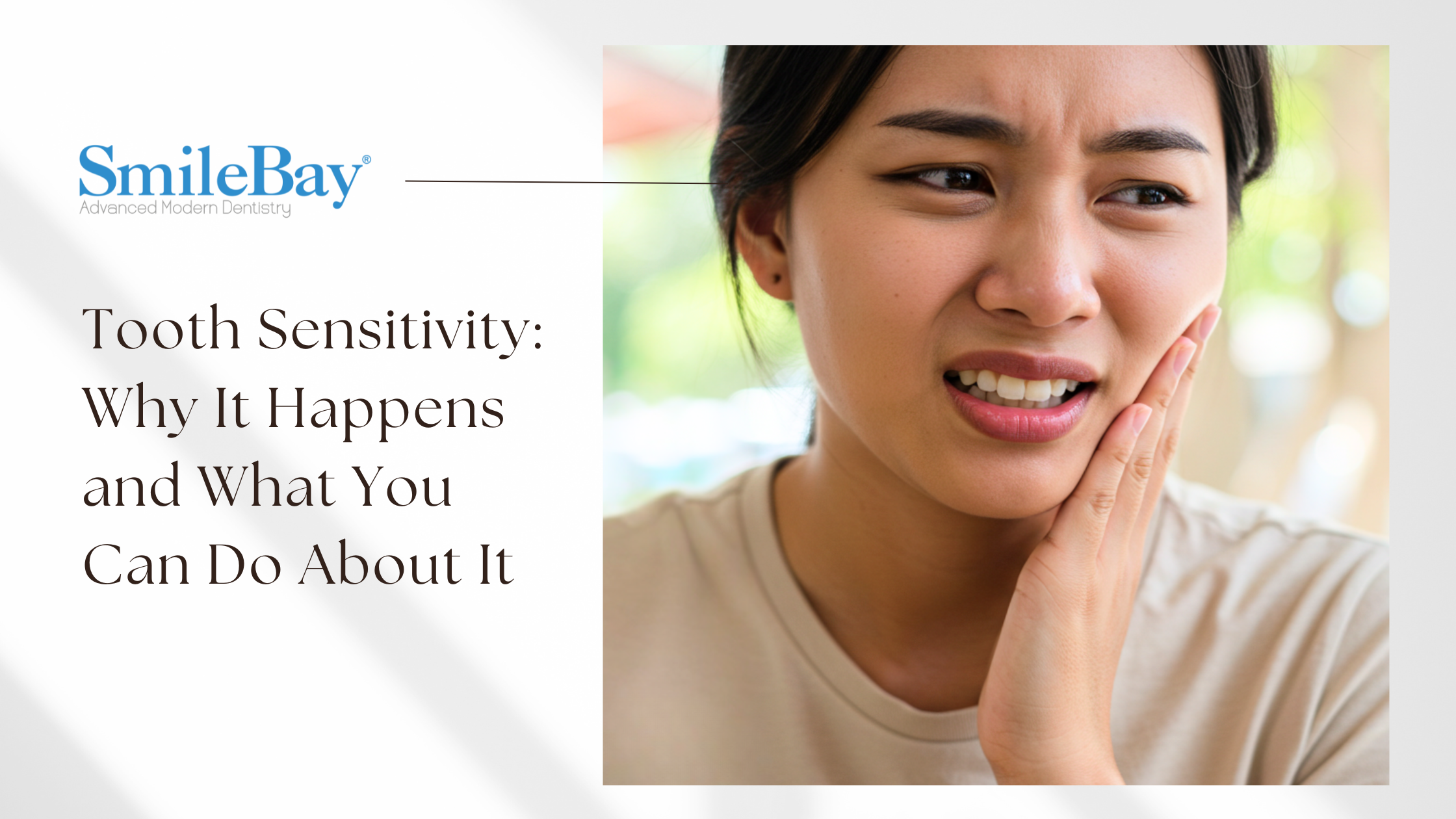
Tooth Sensitivity: Why It Happens and What You Can Do About It
Ever felt a sudden zing of pain when sipping something cold or biting into a sweet treat? You’re not alone — tooth sensitivity is one of the most common dental concerns, and it affects people of all ages.
At SmileBay Dental Penang, we see patients every week who say:
“It hurts when I eat ice cream… but only sometimes.”
“My teeth feel fine until I drink something cold.”
The good news? Most cases of sensitivity are treatable and preventable — once we find the root cause.
What Is Tooth Sensitivity?
Tooth sensitivity happens when the inner part of your tooth (dentin) becomes exposed — either due to enamel wear, gum recession, or small cracks in the tooth.
Dentin contains tiny tubules that lead to your tooth’s nerve, and when hot, cold, sweet, or acidic things touch those tubules — ouch.
Why Are Your Teeth Sensitive?
Here are some common (and surprising) causes:
1. Brushing Too Hard
Using a hard-bristled toothbrush or applying too much pressure can wear away your enamel and push back your gums — exposing sensitive areas.
Switch to a soft-bristled brush and use gentle strokes.
2. Acidic Foods and Drinks
Coffee, citrus fruits, soda, and vinegar-heavy dressings can erode enamel over time.
Rinse your mouth with water after consuming acidic foods — and don’t brush immediately after.
3. Teeth Grinding (Bruxism)
If you grind your teeth (often during sleep), you may not even know it. Grinding causes tiny cracks in enamel that increase sensitivity.
We can fit you with a custom night guard to protect your teeth.
4. Receding Gums or Gum Disease
As your gums pull back, the root surface becomes exposed. This area doesn’t have enamel and is naturally more sensitive.
Deep cleaning or gum treatment may be recommended if gum issues are present.
5. Tooth Decay, Worn Fillings, or Cracks
A cavity or failing filling can expose the dentin underneath — or even the nerve.
We’ll check thoroughly and repair any problem areas before they worsen.
How SmileBay Dental Penang Treats Tooth Sensitivity
We don’t believe in “one-size-fits-all” fixes. We start by identifying the real cause — then create a personalised treatment plan.
Your visit may include:
-
A full check-up and digital x-rays
-
Application of fluoride varnish or desensitising gel
-
Repair of any worn fillings, cavities, or cracks
-
Custom night guard for grinding
-
Gum treatment if recession or inflammation is present
-
Guidance on toothpaste, brushing habits, and food triggers
We’ll also recommend a sensitivity-friendly toothpaste to use at home — and show you exactly how to use it for best results.
When Should You See a Dentist?
If tooth sensitivity:
-
Is getting worse
-
Lasts more than a few days
-
Comes with swelling, pain, or bleeding
-
Makes it hard to enjoy food or drinks
It’s time to get it checked.
The earlier we catch the cause, the easier and more affordable the solution.
Book a Sensitivity Check-Up at SmileBay Penang
Tooth sensitivity isn’t something you have to “just live with.” In most cases, we can reduce or completely eliminate the discomfort with gentle, targeted care.
📍 Visit us at SmileBay Dental
📲 Send us a WhatsApp message to schedule your comfort-focused consultation.
Frequently Asked Questions (FAQs)
Q: Can sensitive teeth go away on their own?
A: Sometimes, but recurring sensitivity usually means something needs attention.
Q: Is sensitivity a sign of a cavity?
A: It can be. We’ll do a full check to rule out any deeper decay.
Q: Can whitening treatments make teeth sensitive?
A: Yes — temporarily. We’ll always evaluate and guide you based on your comfort.
Q: What toothpaste helps with sensitivity?
A: We can recommend dentist-approved brands like Sensodyne, Colgate Pro-Relief, or even prescription-strength options if needed.