What Happens During Invisalign Treatment?
Thinking about Invisalign but not sure what actually happens after you say, “Yes, I want to straighten my teeth”?
You might already know that Invisalign uses clear, removable aligners instead of traditional brackets and wires.
But treatment involves much more than simply receiving a box of clear trays.
Invisalign treatment starts with an assessment and digital treatment plan. A series of custom-made aligners then gradually moves your teeth, with progress monitored by your dentist. Once active treatment is completed, retainers are used to help maintain the new tooth positions.
So what does the journey actually look like?
Let’s go through it step by step.
Step 1: Your Invisalign Consultation
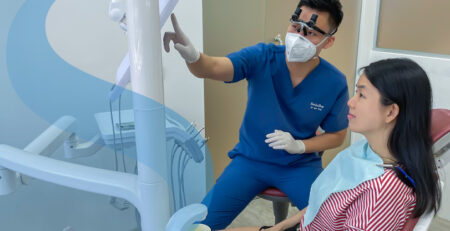
Your first Invisalign appointment is about finding out whether clear aligner treatment is appropriate for your teeth, bite and oral health.
Not everyone who wants straighter teeth will have exactly the same treatment needs.
During your consultation, your dentist may assess:
- How your teeth are positioned
- Crowding or spacing
- Your bite
- Your gum health
- Existing dental problems
- Previous dental treatment
- What you would like to change about your smile
This is also your opportunity to explain what matters most to you.
Maybe one front tooth has always bothered you.
Perhaps your teeth have become more crowded over time.
Or maybe you want to improve your bite as well as the appearance of your smile.
The purpose of the consultation is to understand your starting point and your treatment goals before deciding on an orthodontic plan.
SmileBay already advises patients that suitability for Invisalign should be assessed by a dentist rather than determined from appearance alone.
Step 2: Your Teeth Are Scanned Digitally
Gone are the days when every orthodontic case had to begin with a mouth full of impression material.
Digital intraoral scanners can create a three-dimensional model of your teeth that can be used for orthodontic assessment and treatment planning.
SmileBay uses 3Shape TRIOS intraoral scanners, which create digital 3D models of the teeth and are used for applications including orthodontics, treatment planning and clear-aligner workflows.
During a digital scan, the scanner is moved around your teeth while images are captured and combined into a three-dimensional model.
This allows you and your dentist to view your teeth on a screen from different angles.
For many patients, this is the moment when they understand their teeth in a way that looking in a mirror simply doesn’t show.
You may be able to see:
- Which teeth are crowded
- Where gaps are present
- How one arch relates to the other
- Areas that may need movement
- Your current tooth alignment
The scan then becomes part of the information used to plan treatment.
Step 3: Your Invisalign Treatment Is Planned
Invisalign treatment is planned digitally before you begin wearing your aligners. The dentist determines how the teeth are intended to move and reviews the proposed sequence before treatment progresses.
Invisalign describes its process as creating a customised digital treatment plan after the patient’s teeth have been scanned.
This is important because teeth do not all move at once.
Orthodontic treatment involves a sequence of controlled movements.
Your dentist considers factors such as:
- Which teeth need to move
- In what direction they need to move
- How the bite should develop
- Which movements need to happen first
- Whether additional features may be necessary
Your treatment plan is therefore individual to your teeth.
Two people who both say, “My front teeth are crowded,” can still require very different treatment.
Can I See What My Teeth May Look Like Before Starting?
Digital orthodontic planning can allow patients to view a simulation of planned tooth movement.
This can be a useful way of understanding what the treatment is trying to achieve.
But there is an important distinction.
A digital simulation is a treatment-planning visualisation—not a guarantee that every tooth will move exactly as shown on a screen.
Biological response varies from person to person, and your dentist needs to monitor how your teeth actually respond during treatment.
The value of digital planning is that it gives the dentist a structured treatment objective and helps the patient understand the proposed direction of treatment.
Step 4: Your Custom Invisalign Aligners Are Made
Once the treatment plan is ready, a series of clear aligners is produced specifically for your teeth.
Each aligner is designed as part of a sequence that gradually moves the teeth toward their planned positions.
Invisalign aligners are made from the company’s SmartTrack material and are individually designed for the patient’s treatment plan.
Unlike traditional braces, there are no fixed brackets attached to every tooth and connected by a wire.
Instead, you progress through a series of removable aligners.
The important word here is series.
One aligner does not straighten your entire smile.
Each stage contributes to the overall movement planned by your dentist.
Step 5: You Receive Your First Invisalign Aligners
This is where treatment becomes real.
When your first aligners are fitted, your dentist checks how they sit on your teeth and explains how to wear and care for them.
Invisalign advises that aligners generally need to be worn for approximately 20–22 hours per day, unless your treating dentist gives you different instructions.
That means they are usually removed mainly for:
- Eating
- Drinking beverages other than water
- Brushing
- Flossing
- Cleaning the aligners
This is one of the major lifestyle differences between Invisalign and fixed braces.
You can take the aligners out.
But that convenience also means you are responsible for putting them back in.
Why Does Wearing Invisalign Consistently Matter?
Clear aligners can only guide tooth movement while they are being worn. Consistent wear is therefore an important part of following the treatment plan.
Invisalign recommends approximately 20–22 hours of daily wear for most patients.
If aligners repeatedly spend long periods sitting in their case rather than on your teeth, treatment may not progress according to the intended sequence.
That makes Invisalign different from braces.
With braces, the brackets stay attached.
With clear aligners, patient cooperation becomes an important part of treatment.
For some people, the removability is a major advantage.
For others, fixed braces may fit their habits better.
What Are Invisalign Attachments?
You may notice that some Invisalign patients have small tooth-coloured shapes attached to certain teeth.
These are often called attachments.
Attachments can provide additional surfaces for the aligners to engage with when particular tooth movements are planned.
They are not necessarily placed on every tooth, and not every Invisalign patient has the same number or type.
Your treatment may also involve other orthodontic features depending on your bite and the movements required.
That is why someone’s Invisalign treatment on social media should not be used as a template for what your own treatment will look like.
Does Invisalign Hurt When You Change Aligners?
It is normal for clear aligners to feel snug, and some patients experience temporary pressure or tenderness when beginning treatment or changing to another aligner.
The aligners are designed to apply controlled forces to the teeth as part of orthodontic movement.
You may therefore notice that a new aligner feels tighter than the previous one initially.
That does not mean the treatment should be severely painful.
If you experience persistent pain, an aligner does not fit properly, or something about your treatment concerns you, contact your dentist rather than trying to solve the problem yourself.
Can You Eat Normally With Invisalign?
One practical advantage of removable clear aligners is that the aligners are normally removed for eating.
Invisalign states that patients can generally continue eating their usual foods because the aligners are removed during meals.
That means you do not have the same food restrictions associated with avoiding certain foods around fixed orthodontic brackets and wires.
But there is another side to this convenience:
You need to think more carefully about keeping your teeth and aligners clean before putting them back together for many hours each day.
Follow the cleaning instructions given by your dentist.
Can I Drink Coffee With Invisalign?
For drinks other than plain water, aligners are generally removed according to Invisalign’s patient guidance.
This matters because leaving drinks around the teeth underneath an aligner may not be desirable, and certain drinks can also affect the appearance of clear appliances.
For many working adults, coffee is therefore less of a “Can I ever drink it?” question and more of a:
“Can I build my aligner routine around it?”
That routine becomes easier once you’ve been wearing your aligners for a while.
How Often Do I Change My Invisalign Aligners?
Your aligner-changing schedule should follow the instructions given by your treating dentist.
You may receive several sets of aligners at once and progress through them according to your prescribed schedule.
Do not switch to another aligner early simply because you want treatment to finish faster.
Likewise, if an aligner is lost or damaged, contact the clinic for advice instead of guessing whether you should move forward or backwards in the sequence.
Orthodontic movement needs to follow the treatment plan.
Step 6: You Attend Progress Reviews
Invisalign treatment is not simply:
“Here are your aligners. See you when they’re finished.”
Your dentist needs to monitor your progress during treatment.
Invisalign describes regular doctor check-ups as part of its treatment process so that progress can be evaluated while patients move through their aligner sequence.
During reviews, your dentist may assess:
- Whether the aligners are fitting correctly
- Whether your teeth are moving as expected
- Your bite
- Your oral hygiene
- The condition of attachments
- Whether any changes to the treatment plan are needed
These appointments are important even if everything appears fine to you.
What Happens If My Teeth Don’t Move Exactly as Planned?
Teeth are part of a living biological system.
Sometimes the actual tooth movement may differ from the original digital plan.
If your dentist finds that additional movement is required, further assessment and additional aligners may sometimes form part of the treatment process.
You may hear people refer to these as additional aligners or a treatment refinement.
This is not something patients should try to diagnose themselves.
Your dentist needs to assess the actual tooth position and determine what, if anything, needs to change.
How Long Does Invisalign Treatment Take?
There is no single Invisalign treatment time that applies to everyone. Treatment duration depends on the type and complexity of tooth movement required and how the individual case responds.
Invisalign itself states that treatment times vary according to factors including treatment type, case complexity and patient wear time.
A relatively small alignment correction and a more complex bite problem should not be expected to require identical treatment.
Your dentist can give you an estimated treatment timeline after assessing and planning your case.
Even then, think of it as an estimate, not a guaranteed completion date.
Step 7: Your Active Invisalign Treatment Finishes
Eventually, you reach the stage when the planned active tooth movement is complete.
Your dentist will assess the final alignment and bite before deciding that active treatment can finish.
And then comes a part patients sometimes overlook:
Finishing Invisalign does not mean you are finished with orthodontic care.
Your teeth need to be maintained in their new positions.
That brings us to retainers.
Why Do I Need Retainers After Invisalign?
Retainers are used after Invisalign treatment to help maintain the new positions of your teeth and reduce unwanted movement after active orthodontic treatment finishes.
Retention is not unique to Invisalign.
It is part of orthodontic treatment generally.
Invisalign’s own treatment pathway specifically includes wearing retainers after completing active aligner treatment.
Depending on your individual case, your dentist may discuss different types of retainers.
These can include:
- Clear removable retainers
- Other removable orthodontic retainers
- Fixed retainers in selected cases
The appropriate retention plan should be determined by your treating dentist.
How Long Do I Need to Wear a Retainer?
There is no benefit in completing months of tooth movement only to ignore the retention phase afterward.
Your dentist will tell you how often and how long your retainer needs to be worn according to your individual orthodontic result and retainer type.
Invisalign advises that retainers play an ongoing role in helping maintain tooth alignment and that the prescribed wear schedule may change over time.
Do not stop wearing a retainer simply because your teeth look straight.
Follow the retention schedule prescribed for you.
Is Invisalign Only About Making Teeth Look Straighter?
No.
Straight teeth may be the most visible part of treatment, but orthodontic planning also considers how the upper and lower teeth fit together.
This is why an Invisalign consultation should involve more than looking at the front teeth in a photograph.
Your dentist needs to assess your bite and determine whether clear aligners are appropriate for the movements required.
SmileBay’s current Invisalign information notes that clear aligners can be considered for crowding, spacing and selected bite problems, while more complex cases may require a different orthodontic approach.
The aim should therefore be an appropriately planned smile and bite—not simply teeth that look straight from the front.
Frequently Asked Questions About Invisalign Treatment
1. How many hours a day should I wear Invisalign?
Invisalign recommends wearing aligners for around 20–22 hours each day, unless your treating dentist gives you different instructions.
They are generally removed for eating, drinking beverages other than water and cleaning your teeth.
2. Can I take Invisalign out for a wedding or important meeting?
Invisalign aligners are removable, but treatment still depends on consistently following the prescribed daily wear schedule.
Removing them occasionally for a specific situation needs to fit within that overall schedule.
If you frequently leave them out for extended periods, discuss this with your dentist.
3. Can I eat while wearing Invisalign?
Aligners are generally removed when eating.
One of the practical advantages of Invisalign is that patients can usually continue eating their normal foods rather than having the food restrictions commonly associated with fixed braces.
4. Do I need attachments with Invisalign?
Not everyone requires the same attachments.
Whether attachments or other orthodontic features are included depends on the tooth movements your dentist has planned.
Your dentist can show you what is expected for your individual treatment before or during the treatment process.
5. How often will I need Invisalign check-ups?
You will need progress reviews during Invisalign treatment, but the exact appointment schedule is determined by your treating dentist.
The purpose is to check that your teeth and aligners are progressing appropriately. Invisalign includes regular doctor reviews as part of its standard treatment pathway.
6. Will I need a retainer after Invisalign?
Yes, retention is an important part of maintaining the tooth positions achieved after orthodontic treatment.
Your dentist will recommend the appropriate type of retainer and wear schedule for your case.
The Takeaway
Invisalign treatment involves much more than wearing clear trays.
The journey generally looks like this:
Consultation → Digital Scan → Treatment Planning → Custom Aligners → Regular Wear → Progress Reviews → Final Alignment → Retainers
The technology helps plan tooth movement, but you and your dentist both have important roles.
Your dentist is responsible for assessing, planning and monitoring your treatment.
Your job is to:
- Wear the aligners as instructed
- Look after your teeth and gums
- Keep your aligners clean
- Attend progress reviews
- Follow your aligner schedule
- Wear your retainers after treatment
When all of these pieces work together, clear-aligner treatment becomes a structured orthodontic journey rather than simply a series of plastic trays.
Considering Invisalign in Penang?
If you’re thinking about straightening your teeth with Invisalign, the first step is finding out whether clear aligner treatment is appropriate for your teeth and bite.
SmileBay Dental provides Invisalign and clear-aligner treatment in Penang and uses digital intraoral scanning technology as part of its wider digital dentistry workflow.
SmileBay also has certified Invisalign providers within its dental team, including clinicians whose current profiles specifically identify Invisalign and clear aligner treatment as areas of clinical focus.
Speak to the SmileBay Dental team to arrange an Invisalign assessment and understand what your own treatment journey may involve.
Individual suitability, treatment duration, tooth movement and results vary. This article provides general information and does not replace an individual dental and orthodontic assessment.
Message us on WhatsApp to book your consultation today
Let’s restore your bite, comfort, and confidence — safely and beautifully.