Do I Need Invisalign Before Veneers?
You’re considering veneers because you want to improve the shape, colour or overall appearance of your smile.
But your dentist looks at your teeth and says:
“We may want to straighten them first.”
Your first reaction might be:
“If I’m getting veneers anyway, why would I need Invisalign?”
It’s a good question.
You do not always need Invisalign before veneers. Invisalign changes the position of your teeth, while veneers change their visible shape, colour and surface. If tooth position is a significant part of your smile concern, moving the teeth first may allow the final restorative treatment to be planned differently.
In other cases, the teeth may already be in suitable positions and veneers, bonding or another treatment may be considered without orthodontics first.
So the real question isn’t:
“Is Invisalign better than veneers?”
It is:
“Is my concern mainly caused by tooth position, tooth shape and colour—or a combination of both?”
Let’s break it down.
Invisalign and Veneers Do Different Jobs
Although both can form part of a smile makeover, Invisalign and veneers do not achieve the same thing.
Invisalign moves teeth
Clear aligners gradually reposition teeth according to an orthodontic treatment plan.
They may be used to address concerns involving:
- Crowding
- Gaps
- Rotated teeth
- Uneven tooth positions
- Selected bite problems
- Teeth that lean or protrude
Veneers change the visible part of teeth
Dental veneers are thin restorations placed over the front surface of selected teeth.
Depending on the individual case, they may be considered when changing:
- Tooth shape
- Tooth proportions
- Colour
- Small chips
- Surface appearance
- Certain minor irregularities
So if a tooth is the wrong shape, a veneer may help change its appearance.
If a tooth is significantly in the wrong position, orthodontic treatment addresses a different part of the problem.
Sometimes a smile needs one.
Sometimes the other.
And sometimes both.
Can You Put Veneers on Crooked Teeth?
Veneers may be considered for selected teeth with mild positional or shape irregularities, but they do not physically move the tooth or correct the underlying tooth position.
This distinction is important.
Imagine one front tooth is slightly rotated.
There may be more than one way to improve how it looks.
One approach could involve changing the visible contour of the tooth with a restoration.
Another approach could involve moving the tooth into a better position first.
Which is more appropriate depends on:
- How rotated the tooth is
- How much healthy enamel is present
- Its position relative to neighbouring teeth
- Your bite
- Tooth proportions
- Whether colour also needs changing
- What you want the final smile to look like
The dentist needs to decide whether the concern can be addressed appropriately with restorative treatment or whether the tooth would benefit from being repositioned first.
Why Might a Dentist Recommend Invisalign Before Veneers?
One important reason is that moving teeth first can change what restorative treatment is needed afterward.
Suppose a front tooth sits too far forward.
If the dentist tries to make that tooth appear aligned using only a veneer, the restoration still needs to work with the tooth underneath.
But if orthodontic treatment first moves the tooth into a more appropriate position, the restorative plan may be different.
This may influence:
- How much tooth shape needs changing
- The final thickness and contour of the restoration
- How the teeth align with one another
- Tooth proportions
- The amount of healthy tooth structure that needs modification
- How the final smile fits together
This is why orthodontics and restorative dentistry can sometimes work better as stages of one smile plan rather than competing treatment choices.
Does Invisalign Before Veneers Mean Less Tooth Preparation?
In some cases, improving tooth position before restorative treatment may allow the dentist to plan the veneers more conservatively because the restoration does not have to compensate as much for an unfavourable tooth position.
But this is not a guarantee.
The amount of tooth preparation required for a veneer depends on many factors, including:
- Existing tooth position
- Tooth colour
- Tooth shape
- Available enamel
- The material planned
- How much the final shape needs to change
- The dentist’s restorative plan
Some veneer cases may involve minimal preparation.
Others may require more.
The important principle is:
Do not decide how much tooth structure needs changing until the dentist knows where the tooth should ideally be positioned.
What If My Front Teeth Stick Out?
If teeth noticeably protrude, simply making the visible surface flatter may not address the whole problem.
The dentist needs to look at:
- Tooth angle
- Tooth position
- Lip support
- Bite
- Available space
- Overall facial and smile proportions
In selected cases, orthodontic movement may help reposition the teeth before any cosmetic restoration is considered.
After alignment, you may even find that the amount of restorative treatment originally imagined has changed.
Some teeth may still benefit from veneers or bonding.
Others may no longer need as much cosmetic alteration.
This is one reason smile makeover planning should happen before irreversible treatment begins.
What If My Teeth Are Crowded?
Crowding means there is not enough space for all of the teeth to sit in an ideal alignment.
When the crowding is mainly a tooth-position problem, orthodontic treatment can physically move those teeth.
Trying to correct more noticeable crowding only by changing the outer shape of the teeth may require a different level of restorative alteration.
That doesn’t mean every slightly crowded smile needs months of Invisalign.
Mild irregularities can sometimes be managed differently.
But the dentist should first ask:
“Would moving these teeth create a better foundation for the final smile?”
If the answer is yes, Invisalign or another orthodontic approach may become the first stage.
What If I Have Gaps Between My Teeth?
This depends on why the gaps exist.
If your teeth are appropriately shaped but spaced apart, Invisalign may be able to move them closer together.
But if the spaces are partly caused by small or narrow teeth, closing every gap orthodontically may not always produce the proportions desired for the final smile.
In those cases, the plan may involve:
- Moving the teeth into suitable positions
- Redistributing the space
- Improving tooth shape afterward with bonding or veneers
This is different from simply closing every visible space.
The goal is to create the right tooth positions and proportions together.
SmileBay has previously documented a multidisciplinary case where Invisalign was used to create and redistribute space before restorative treatment involving a Maryland bridge and crown.
Can Invisalign Fix the Shape or Colour of My Teeth?
No.
This is where orthodontics has clear limits.
Invisalign moves teeth it does not change the natural colour, size, surface texture or intrinsic shape of the tooth itself.
For example, after Invisalign you may still have:
- A chipped front tooth
- An unusually small tooth
- Discolouration
- Worn edges
- Uneven tooth shapes
- Old restorations that no longer match
These concerns may be managed separately.
Depending on the situation, treatment could include:
- Teeth whitening
- Composite bonding
- Veneers
- Crowns
- Another restorative approach
This is why orthodontic treatment can sometimes be stage one rather than the entire smile makeover.
Can Veneers Straighten Teeth Without Invisalign?
Veneers can sometimes create the appearance of improved alignment when tooth-position differences are relatively limited.
But a veneer does not move the root or reposition the actual tooth.
That makes the distinction important:
Orthodontics changes tooth position.
Veneers change tooth appearance.
If the underlying tooth position is already acceptable and only a small visual correction is needed, restorative treatment may sometimes address the concern.
If tooth position is more significant, your dentist may recommend considering orthodontics first.
The right decision depends on what needs changing not simply which treatment is faster.
When Might You NOT Need Invisalign Before Veneers?
You may not need orthodontic treatment first when your teeth are already in suitable positions for the restorative plan.
For example, the main concern might be:
- Tooth colour
- A chipped edge
- Unusual tooth shape
- Small teeth
- Surface defects
- Existing restorations
- Mild differences in proportion
In these situations, moving the teeth may not provide a meaningful benefit.
The dentist may instead discuss:
- Whitening
- Bonding
- Veneers
- Crowns in appropriate cases
- A combination of restorative treatments
This is why automatically recommending Invisalign to every veneer patient would make little sense.
Orthodontics should have a clear purpose.
When Might Invisalign Be Worth Considering First?
Your dentist may want to discuss orthodontic treatment when there is:
- Noticeable crowding
- Significant tooth rotation
- Teeth positioned too far forward or backward
- Uneven spacing
- Tooth positions that could complicate veneer design
- A bite issue that should be considered before restorative treatment
- A desire to minimise how much restorative correction is needed
Even then, treatment is individual.
A small positional correction and a complex orthodontic case are very different.
Can I Have Invisalign and Veneers as Part of the Same Smile Makeover?
Yes. Invisalign and veneers can complement each other because they address different parts of the smile.
A combined treatment plan may look like:
Stage 1: Orthodontic planning
The dentist assesses how the teeth should ideally be positioned.
Stage 2: Invisalign treatment
Selected teeth are gradually moved according to the orthodontic plan.
Stage 3: Reassessment
Once alignment has improved, the dentist reassesses:
- Tooth shape
- Tooth colour
- Smile proportions
- Gum levels
- Bite
- What still needs changing
Stage 4: Whitening, if appropriate
If whitening forms part of the plan, its timing may be considered before selecting the final colour of restorations.
Stage 5: Restorative treatment
Selected teeth may then be treated with bonding, veneers, crowns or another planned restoration.
Stage 6: Retention and maintenance
The orthodontic result still needs to be maintained after Invisalign treatment.
The exact sequence can vary.
The important point is that each stage should be planned with the final smile in mind.
SmileBay’s SMILEfix concept already combines aesthetic approaches including Invisalign, orthodontics, veneers, crowns and other restorative techniques according to the individual treatment plan.
Should I Finish Invisalign Before Planning My Veneers?
Ideally, the dentist should think about the final restorative goal before orthodontic treatment is finished.
Why?
Because the orthodontist or treating dentist needs to know where the teeth should end up.
If veneers are likely to be used afterward, the ideal finishing positions may take into account:
- Planned tooth proportions
- Space needed for restorations
- Gum levels
- Symmetry
- The position of neighbouring teeth
- Final bite
This is why multidisciplinary treatment planning can be valuable.
Rather than:
“Finish Invisalign first, then we’ll decide what to do.”
a more coordinated approach is:
“Let’s understand the final smile first, then use Invisalign to help create the right foundation.”
Can Digital Smile Design Help Plan Invisalign and Veneers Together?
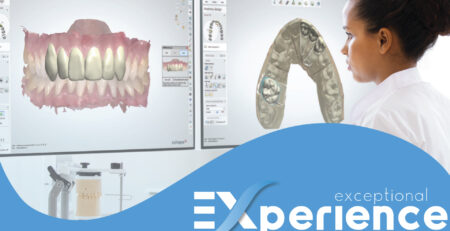
Digital Smile Design can help the dentist visualise how tooth position and tooth shape may work together in the proposed final smile.
SmileBay uses digital intraoral scanning and smile-design technology within its digital dentistry workflow.
A digital model can help the treatment team consider:
- Current tooth positions
- Planned alignment
- Proposed tooth shape
- Tooth proportions
- Smile width
- How the teeth relate to the lips
- Which changes may require orthodontics
- Which changes may require restorative treatment
For the patient, this can make the treatment sequence easier to understand.
Instead of hearing:
“First Invisalign, then veneers.”
you can discuss:
“What is each stage actually trying to change?”
That is a much more useful conversation.
What Happens If I Get Veneers First and Want Invisalign Later?
Orthodontic treatment may sometimes still be possible when dental restorations are already present.
However, existing veneers, crowns, bridges and other restorations become part of the treatment-planning picture.
The dentist needs to assess:
- Which restorations are present
- Their condition
- Which teeth need movement
- How orthodontic attachments may interact with restorations
- Whether the restorations will still fit the final tooth positions
- Whether any restorations may eventually need modification or replacement
This is another reason why, when both treatments are being considered from the beginning, it can be useful to plan their sequence before starting.
Will I Still Need Retainers If I Get Veneers After Invisalign?
Yes. Veneers do not replace the need for orthodontic retention.
After Invisalign moves your teeth, retainers help maintain their new positions.
Placing veneers on selected teeth does not mean the teeth can no longer move.
Your dentist will recommend a retention plan that takes the final restorations into account.
This is important because reopening spaces or changes in alignment could affect the appearance and relationship of the completed smile makeover.
Do I Need Veneers After Invisalign?
Not necessarily.
This is another important point.
Some patients begin Invisalign thinking:
“I’ll straighten everything first and then get veneers.”
But after the teeth are aligned, they may be happy with the result after:
- Orthodontics alone
- Orthodontics plus whitening
- Minor bonding
- Another conservative finishing treatment
Other patients may still want veneers because they would like to change:
- Tooth shape
- Size
- Colour
- Surface appearance
- Worn or damaged areas
The restorative decision should therefore be reassessed after orthodontic movement rather than assumed from the start.
The goal of a smile makeover isn’t to perform every available treatment.
It is to use only the treatments needed to achieve the agreed objective.
Frequently Asked Questions About Invisalign Before Veneers
1. Do I always need Invisalign before veneers?
No.
If your teeth are already positioned appropriately and your main concern is tooth shape, colour or surface appearance, orthodontic treatment may not be necessary.
Invisalign is considered when changing tooth position could improve the overall treatment plan.
2. Can veneers make crooked teeth look straight?
Veneers may improve the appearance of selected mild irregularities because they can change the visible contour of a tooth.
However, veneers do not physically move the tooth.
For more significant position problems, your dentist may discuss orthodontic treatment instead of or before restorative correction.
3. Is it better to straighten teeth before veneers?
It depends on your individual case.
When tooth position is contributing substantially to the smile concern, straightening first may create a more favourable foundation for restorative treatment.
When position is already suitable, orthodontics may add little benefit.
4. Can I get Invisalign after veneers?
It may be possible, depending on the restorations present and the orthodontic movements required.
Your dentist needs to assess the veneers and incorporate them into the treatment plan.
If you already know you are considering both treatments, it may be easier to plan the sequence before either treatment begins.
5. How soon after Invisalign can I have veneers?
There is no single waiting period that applies to every patient.
Your dentist needs to assess:
- Completion of orthodontic movement
- Tooth position
- Gum condition
- Retention plan
- Any whitening planned
- The restorative treatment required
Your treatment sequence should be planned individually.
6. Will I need retainers after getting veneers?
Yes, if you have undergone orthodontic treatment.
Veneers do not prevent teeth from moving.
Your retainer will form part of maintaining the orthodontic result after the smile makeover is completed.
The Takeaway
So, do you need Invisalign before veneers?
Not always.
The easiest way to understand the difference is:
Invisalign changes where the tooth sits.
Veneers change how the visible tooth looks.
If your smile concern is mainly:
- Tooth position
- Crowding
- Rotation
- Uneven spacing
- Alignment
your dentist may discuss orthodontic treatment first.
If the teeth are already appropriately positioned but you want to change:
- Shape
- Colour
- Size
- Surface appearance
- Small chips
restorative treatment may be considered without Invisalign.
And if both position and appearance need changing, Invisalign and veneers may sometimes work together as stages of the same smile makeover.
The most important question isn’t:
“Which treatment is better?”
It is:
“What does each treatment need to change in my smile?”
Once that is clear, the sequence becomes much easier to understand.
Considering Invisalign and Veneers for a Smile Makeover in Penang?
If you’re considering veneers but are unsure whether your teeth should be straightened first, begin with a complete smile assessment rather than choosing one treatment in isolation.
SmileBay Dental’s SMILEfix smile makeover approach can combine treatments such as Invisalign, orthodontics, veneers, crowns and other restorative options according to the patient’s individual dental condition and smile goals.
SmileBay also uses digital intraoral scanning and Digital Smile Design as part of its wider digital dentistry workflow.
Your dentist can assess:
- Tooth position
- Tooth shape
- Colour
- Bite
- Gum levels
- Existing restorations
and explain whether your treatment may be best approached with:
Invisalign alone, veneers alone, or a carefully planned combination of both.
Speak to the SmileBay Dental team for an individual smile assessment and treatment discussion.
Suitability for Invisalign, veneers and combined smile makeover treatment can only be determined after clinical assessment. Digital treatment planning and simulations are communication tools and do not guarantee an identical final result.
Message us on WhatsApp to book your consultation today
Let’s restore your bite, comfort, and confidence — safely and beautifully.