Can You Get Dental Implants If You Have Bone Loss?
Being told that you have bone loss can make you wonder whether dental implants are still possible.
The good news is that bone loss does not automatically mean you cannot have dental implants.
Depending on how much bone remains and where the missing tooth is located, your dentist may be able to plan implant treatment directly or recommend procedures such as a bone graft or sinus lift to create additional support.
The first step is finding out exactly how much bone you have.
If you’re considering dental implants in Penang and are worried that you may not have enough bone, here’s what you need to know.
Why Does Bone Loss Happen After Losing a Tooth?
When a tooth is removed or lost, the jawbone in that area no longer receives the same stimulation it received from the tooth and its root.
Over time, the ridge of bone where the tooth used to sit can become narrower or shorter.
Bone loss may also be associated with:
- Long-term missing teeth
- Gum disease
- Dental infections
- Trauma or injury
- Previous tooth extractions
- Wearing dentures for many years
- Natural differences in jaw anatomy
This is one reason why someone who lost a tooth recently may have a very different implant treatment plan from someone whose tooth has been missing for many years.
Does Bone Loss Mean I Can’t Have Dental Implants?
Not necessarily.
Having enough healthy bone is an important consideration when planning conventional dental implants, but modern implant dentistry offers several ways of managing reduced bone volume in appropriate patients.
Professional implant guidance recognises bone augmentation as an established approach for rebuilding deficient areas of the jaw before or during implant treatment. Implant treatment in regenerated bone can achieve good outcomes when cases are appropriately selected and managed.
The important question is therefore not simply:
“Do I have bone loss?”
It is:
“How much bone do I have, where is the bone loss, and what treatment approach is appropriate for me?”
That answer requires an examination and suitable dental imaging.
How Does a Dentist Check Whether You Have Enough Bone?
Looking inside the mouth alone cannot provide all the information needed for implant planning.
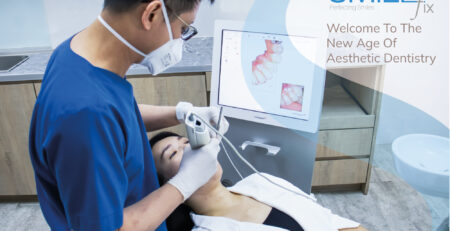
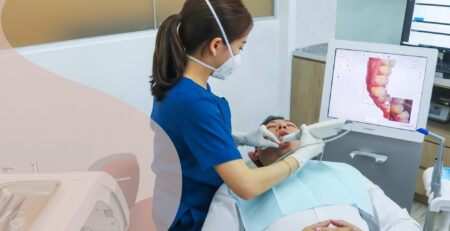
A dental implant assessment may include 3D imaging to evaluate the shape and amount of jawbone and the position of nearby structures.
At SmileBay Dental, the existing implant consultation process includes 3D dental imaging to assess bone structure and identify important anatomy such as nerves and sinuses. The scan can also help the dentist determine whether additional procedures such as bone grafting or a sinus lift may be needed.
A 3D assessment may help your dentist evaluate:
- Bone height
- Bone width
- Bone shape
- Position of nearby teeth
- Nerve position
- Sinus position
- Proposed implant position
This allows the implant plan to be based on your actual anatomy rather than guesswork.
What Is a Bone Graft for Dental Implants?
A bone graft is a procedure used to add or rebuild bone in an area where there may not be enough bone for the planned implant treatment.
Think of the jawbone as the foundation for the implant.
If the foundation is too narrow or deficient in a particular area, additional bone may sometimes be required before the implant can be positioned appropriately.
SmileBay lists bone grafting as one of its surgical implant-related treatments for areas where bone volume or density has been lost.
Depending on the individual case, grafting may be carried out:
- Before implant placement
- At the same time as implant placement
- As part of a more extensive reconstruction
There are also different grafting approaches and materials. The appropriate method depends on the type and extent of the bone defect.
Importantly, not every patient with bone loss needs the same type of graft.
More complex bone deficiencies can require more advanced procedures and may carry a greater risk of complications, which is why individual planning is important.
What Is a Sinus Lift?
A sinus lift is a type of bone augmentation that may be considered when there is insufficient bone in the upper back jaw for the planned dental implant.
The maxillary sinuses are located above the upper back teeth.
After these teeth have been missing for some time, there may sometimes be limited bone between the mouth and the sinus.
A sinus lift aims to create additional bone height in this area so that implant placement may become possible.
SmileBay currently lists sinus lift treatment as part of its surgical implant services.
Professional implant consensus guidance also recognises maxillary sinus floor elevation as an established method of increasing available bone in suitable patients.
However, having a missing upper tooth does not automatically mean you need a sinus lift.
Your dentist must first assess your scan.
Do I Need a Bone Graft Before My Implant?
Not everyone does.
Some people may have enough bone for an implant even if a tooth has been missing for several years.
Others may have a small area of deficiency that can be managed during implant placement.
More significant bone loss may require a separate grafting procedure and additional healing before an implant can be placed.
Your treatment may depend on:
1) How much bone remains
A small deficiency and a severe deficiency are very different clinical situations.
2) Where the implant is needed
Bone anatomy differs between the front teeth, back teeth, upper jaw and lower jaw.
3) How long the tooth has been missing
The bone surrounding a missing tooth can change over time.
4) Your gum health
Healthy tissues around an implant are important for long-term maintenance.
5) The planned final tooth
Implant planning should consider where the final crown or replacement teeth need to be positioned—not simply where bone happens to be available.
This is why implant treatment should begin with the final result in mind.
Can the Bone Graft and Dental Implant Be Done Together?
Sometimes, yes.
In selected cases, the dentist may be able to perform bone augmentation at the same appointment as implant placement.
In other cases, the bone deficiency may need to be treated first and allowed to heal before implant placement is considered.
The decision depends on factors including:
- Size of the bone defect
- Stability available for the implant
- Implant position
- Gum condition
- Surgical complexity
- Overall treatment plan
There is no single approach that is correct for every patient.
What If My Bone Loss Is Severe?
More significant bone loss does not necessarily mean treatment is impossible, but it can make implant treatment more complex.
Advanced cases may require additional surgical planning or different approaches to rebuilding the missing bone.
International implant consensus guidance notes that clinicians have several techniques available for treating deficient ridges, while more demanding defects generally involve greater complexity and can have higher complication rates.
This is one reason complex implant cases benefit from detailed diagnosis before treatment begins.
Your dentist should explain:
- What type of bone loss you have
- Whether grafting is necessary
- Available treatment alternatives
- Expected treatment stages
- Possible risks and complications
- Expected healing process
If implant treatment is not appropriate, your dentist should also discuss alternative ways of replacing the missing teeth.
Can Digital Technology Help With Implant Planning?
Digital technology can help dentists understand a patient’s anatomy and plan implant positioning before surgery.
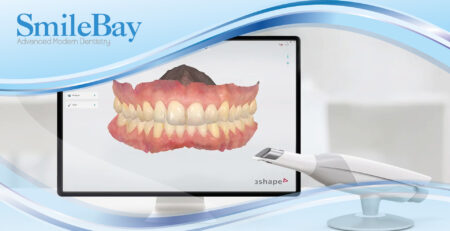
SmileBay describes a digital implant workflow that combines CBCT 3D imaging with intra-oral digital scans.
The information can then be used in implant-planning software to assess the proposed implant position in relation to the available bone and important anatomical structures. SmileBay also uses 3D-printed surgical guides for selected computer-guided implant procedures.
This can be particularly useful when bone anatomy needs careful assessment.
Technology, however, does not replace clinical judgement.
The dentist still needs to determine whether an implant is appropriate and what surgical approach is suitable for the individual patient.
What Happens During an Implant Assessment at SmileBay?
If you are concerned about bone loss, the implant assessment is designed to help determine what is actually possible before treatment begins.
SmileBay’s current implant consultation information describes an assessment that may include:
- Medical and dental history
- Examination of the missing-tooth area
- Assessment of the gums
- Bite assessment
- 3D dental imaging
- Evaluation of bone structure
- Assessment of nerves and sinuses
- Evaluation of implant suitability
- Assessment of whether bone grafting or a sinus lift may be needed
- Development of an individual treatment plan
Instead of assuming that bone loss means “no implants,” the goal is to understand the condition of the jaw and identify the available treatment options.
What Happens If I Decide Not to Replace a Missing Tooth?
The effects of a missing tooth vary according to where it is located, the condition of the surrounding teeth and how your bite functions.
Possible changes over time can include movement of nearby teeth and changes in the jawbone around the missing-tooth area.
That does not mean every missing tooth must automatically be replaced with an implant.
Implants are only one treatment option.
Depending on your individual situation, your dentist may discuss:
- Dental implant
- Dental bridge
- Removable denture
- Implant-supported denture
- Monitoring in selected situations
The right decision depends on your oral health and treatment needs.
Frequently Asked Questions About Dental Implants and Bone Loss
1) Can I still get a dental implant if my tooth has been missing for many years?
Possibly.
A tooth that has been missing for many years may be associated with reduced bone volume, but this does not automatically rule out implant treatment.
A dental examination and 3D assessment can help determine how much bone remains and whether additional treatment may be required.
2) Does everyone need a bone graft before getting implants?
No.
Bone grafting is only needed when the available bone is insufficient for the planned treatment or when augmentation is considered necessary for the implant site.
Some patients have enough bone to proceed without grafting.
3) How do I know if I have bone loss?
Bone loss is not always something you can see or feel yourself.
Your dentist may identify changes during a clinical examination and use dental imaging to evaluate the bone surrounding your teeth or a missing-tooth area.
For implant planning, 3D imaging can provide additional information about bone height, width and surrounding anatomy.
4) Is bone grafting painful?
Bone graft procedures are performed with appropriate anaesthesia.
Some swelling, tenderness or discomfort can occur afterward, and the recovery experience depends on the type and extent of the procedure.
Your dentist should explain what to expect and provide individual post-treatment instructions.
5) Is a sinus lift the same as a bone graft?
A sinus lift is a specific type of bone augmentation performed in the upper back jaw.
It is considered when the amount of bone below the maxillary sinus is insufficient for the planned implant treatment.
Not every upper-jaw implant requires a sinus lift.
6) Can implants placed in grafted bone last?
Implants can function successfully in augmented bone when treatment is properly planned and maintained.
Clinical consensus evidence has found implant survival in regenerated bone following treatment of localised ridge defects to be comparable with implants placed in native bone, although outcomes depend on the individual clinical situation.
Regular cleaning and professional dental maintenance remain important after implant treatment.
The Takeaway
If you have missing teeth and have been told that you have bone loss, don’t assume that dental implants are automatically impossible.
Modern implant dentistry offers several ways to assess and, in appropriate cases, manage reduced jawbone.
The key is understanding:
- How much bone remains
- Where the bone has been lost
- Whether augmentation is necessary
- Which implant approach fits your anatomy
- Whether another tooth-replacement option may be more appropriate
A proper examination and 3D assessment can provide much more useful information than trying to judge your suitability from symptoms alone.
Book a Dental Implant Assessment in Penang
If you’re considering dental implants in Penang but are concerned about jawbone loss, an implant assessment can help determine what treatment options may be available.
SmileBay Dental provides implant assessment and implant-related surgical treatments including bone grafting and sinus lift procedures, while its digital implant workflow uses 3D imaging for treatment planning.
SmileBay Dental – Penang
Message our team on WhatsApp to arrange an implant consultation and find out which SmileBay location is appropriate for your treatment.
Individual suitability for dental implants, bone grafting and sinus augmentation can only be determined after a clinical assessment.
Message us on WhatsApp to book your consultation today
Let’s restore your bite, comfort, and confidence — safely and beautifully.