Toothache Pain? Here’s What It Could Really Mean
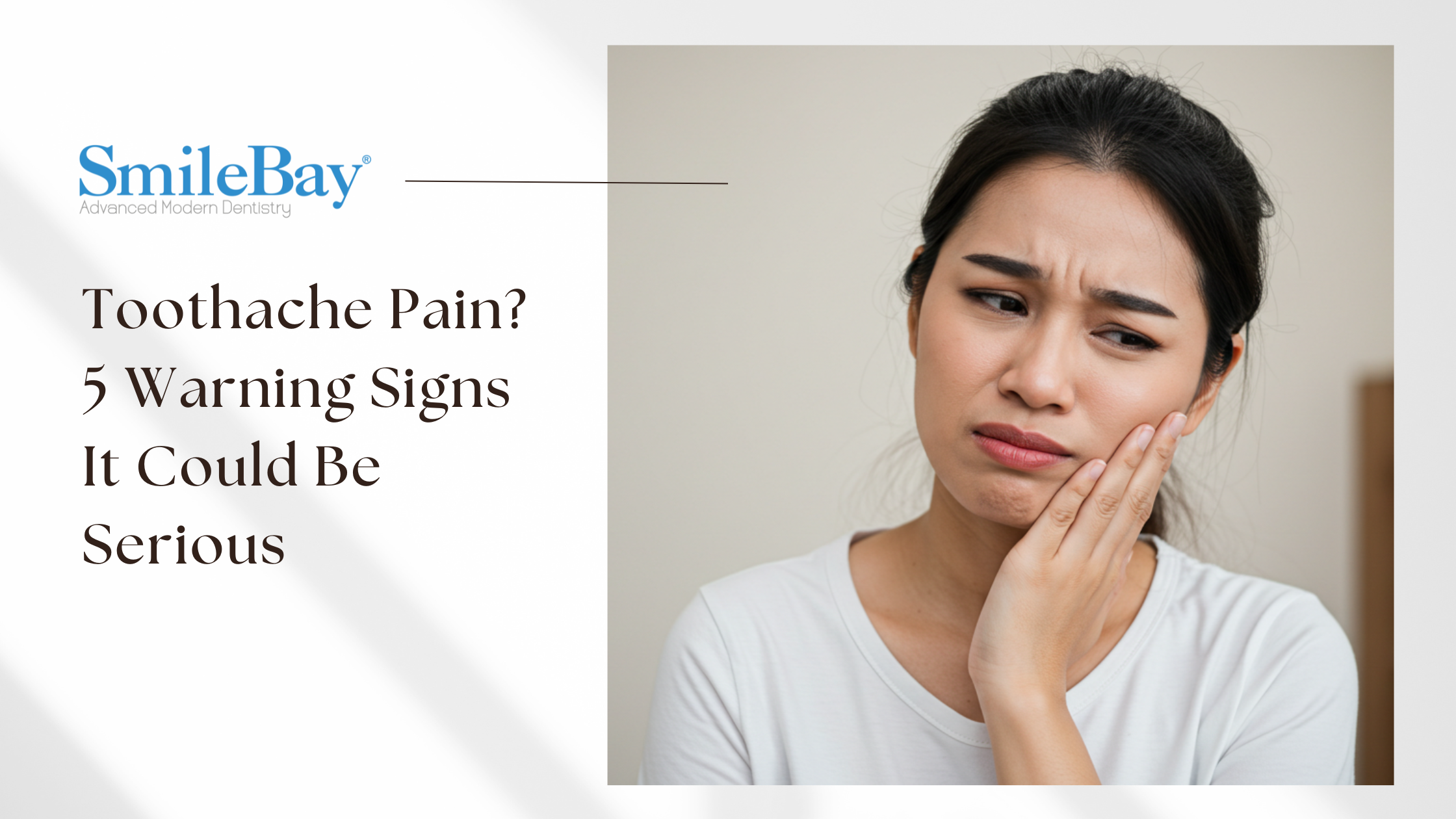
Toothaches are something most people experience at some point — maybe a dull throb, a sharp jolt when you bite down, or a sudden sensitivity to cold drinks. While it’s easy to ignore at first, a toothache could be a sign that your tooth is in real trouble.
At SmileBay Dental in Penang, many patients tell us they waited weeks or even months before coming in for what started as “just a little pain.” By the time they arrive, the issue has often become more complex — and costly — to treat.
Let’s explore the most common causes of toothaches and how to know when it’s time to see your dentist.
Common Causes of Toothaches
1. Tooth Decay (Cavities)
A cavity begins as a small hole in the enamel. If caught early, it’s painless and easily treated with a filling. But once it reaches the inner layer (dentin or nerve), it can cause serious pain.
2. Gum Disease (Gingivitis or Periodontitis)
Inflamed, infected gums can make your teeth feel sore or loose. If untreated, this can lead to bone loss and even tooth loss.
3. Tooth Fracture or Crack
You might not see it — but a hairline crack from biting hard food or grinding at night can expose the inner part of your tooth, causing pain when chewing or drinking.
4. Dental Abscess (Infection)
This is one of the most serious causes of toothache. If bacteria reach the nerve, it can form an abscess — a pocket of pus. This may cause throbbing pain, swelling, and even fever.
5. Sinus Pressure or Referred Pain
Sometimes, a toothache isn’t from your tooth at all. Upper molars can feel sore due to sinus issues, jaw tension, or nerve pain from nearby areas.
Signs Your Toothache Needs Immediate Attention
Not all toothaches are urgent — but here are some red flags you shouldn’t ignore:
✅ Pain that keeps you up at night
✅ Swelling around the jaw or cheek
✅ Fever or swollen lymph nodes
✅ Bad taste or pus discharge
✅ Pain when biting or chewing
✅ Pain that gets worse over time
What Treatments Are Available?
At SmileBay Dental, we always begin with a full oral examination and possibly a digital x-ray to find the source of the pain. Treatment options may include:
- Fillings – for small to moderate cavities
- Deep Cleaning – if gum disease is the cause
- Dental Crown – if the tooth is cracked or weak
- Root Canal – to remove infection from inside the tooth
- Tooth Extraction – only if the tooth cannot be saved
💡 The earlier you seek care, the simpler the solution usually is.
What Can You Do at Home (Temporarily)?
While you wait to see a dentist, you can try:
-
Rinsing with warm salt water
-
Taking over-the-counter pain relief (e.g. paracetamol)
-
Applying a cold compress to the cheek
-
Avoiding hot, cold, or sweet foods on the affected side
⚠️ Home remedies only provide temporary relief — they don’t treat the root cause.
Experiencing Toothache in Penang? We’re Here to Help
Whether it’s a mild discomfort or sharp pain, your body is trying to tell you something. Don’t ignore it. The sooner you visit a dentist, the better the chance of saving your tooth — and your smile.
📍 SmileBay Dental clinics are available at Island Plaza, Weld Quay, Bay Avenue, Juru Sentral & Raja Uda
📲 Message us on WhatsApp to book a toothache check-up or get advice today.
🔎 Frequently Asked Questions (FAQs)
Q: How long should I wait before seeing a dentist for a toothache?
A: If the pain lasts more than 1–2 days, or gets worse, you should see a dentist as soon as possible.
Q: Can a toothache go away on its own?
A: Maybe — but the underlying issue usually remains. It’s best to have it checked early.
Q: Will I need a root canal if I have a bad toothache?
A: Not always. It depends on the cause. That’s why an accurate diagnosis is important.